
Luminaire Installation at Nancy and Rich Kinder Building, The Museum of Fine Arts, Houston
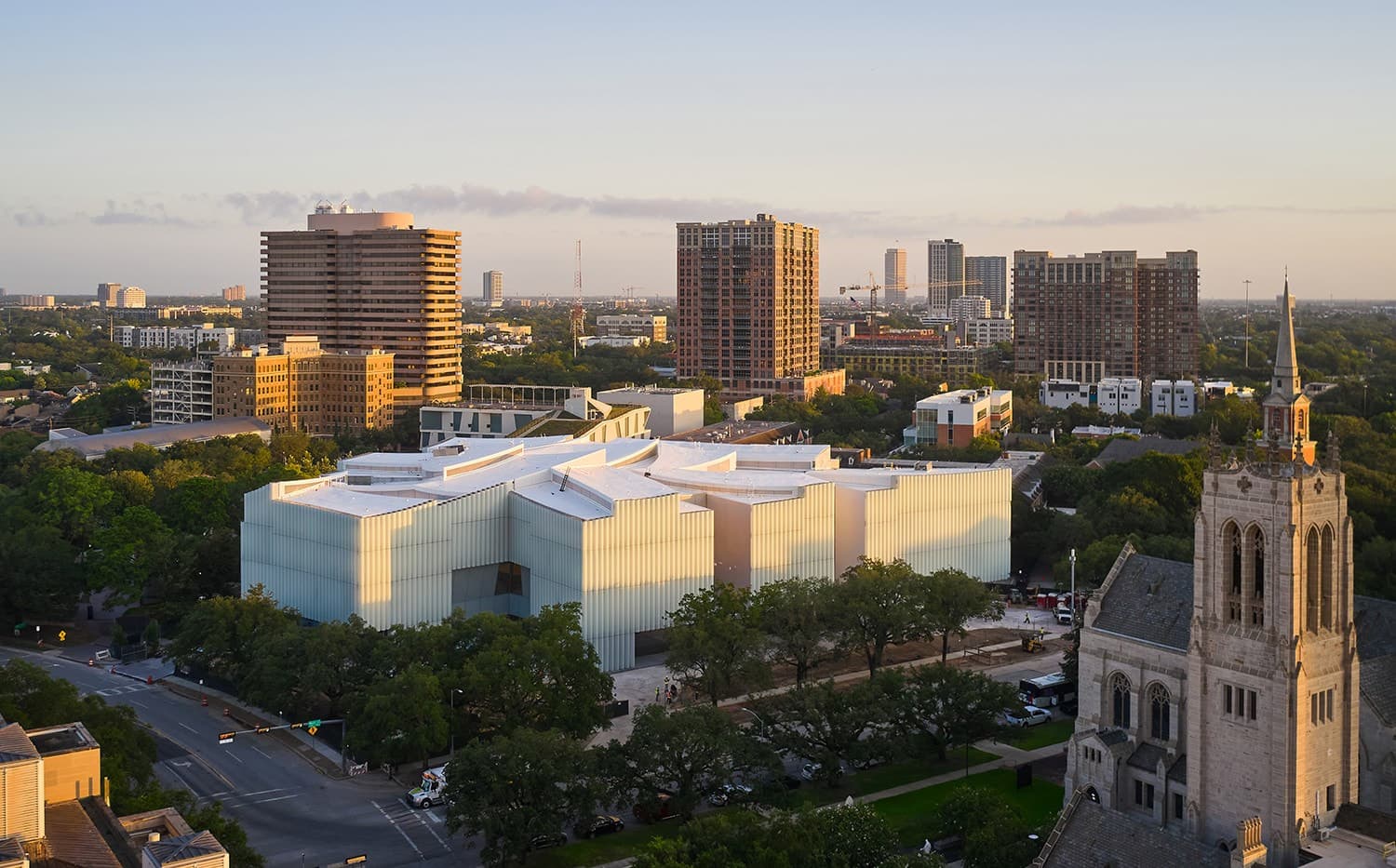
Photo — Peter Molick / Thomas Kirk III
As a member of the QuarkStar engineering team, I was deeply involved in the research, development, and manufacturing of wall-washing luminaires for the Nancy and Rich Kinder Building at The Museum of Fine Arts, Houston (MFAH). This $450 million campus expansion project included one of the largest lighting installations in North America in 2020.
Phase 1. Research and Development of Q-Wall Luminaire
The development of the Q-Wall luminaire, utilizing Edge-X technology, was a multi-year process. We progressed from functional prototypes to a fully UL-certified product.
The project involved refining the design, conducting characterization and mechanical/electrical validations, performing thermal analysis, and developing intricate assembly methods for sub-components, including the precise bonding of optical parts.
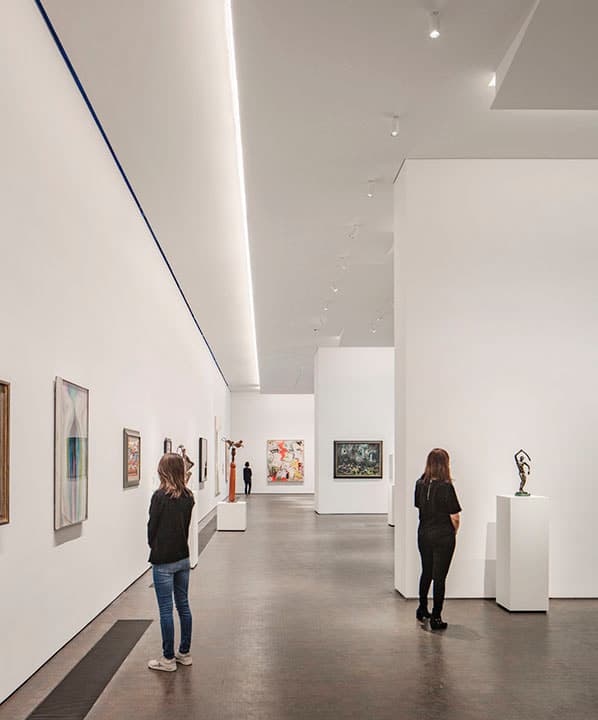
The Museum of Fine Arts, Houston sought diffuse, uniform lighting that could be tuned to match natural daylight. The Q-Wall luminaire achieved this with dual 3000K and 5000K LED channels, perfectly mixed between each LED using QuarkStar Edge-X reflective waveguide technology. The slim design of the luminaires allowed for discreet installation within ceiling coves. Photo — Richard Barnes
Phase 2. Manufacturing and Installation
Manufacturing commenced in 2019, producing over 1,500 linear feet of luminaires. This required retrofitting our lab and shop space into a UL-certified assembly floor, training staff, and implementing stringent quality control processes.
In the months leading up to production, we collaborated with our manufacturing partners to produce and bond the injected optical components, a process that involved extensive testing and ultimately required the precision of a robotic arm in manufacturing.
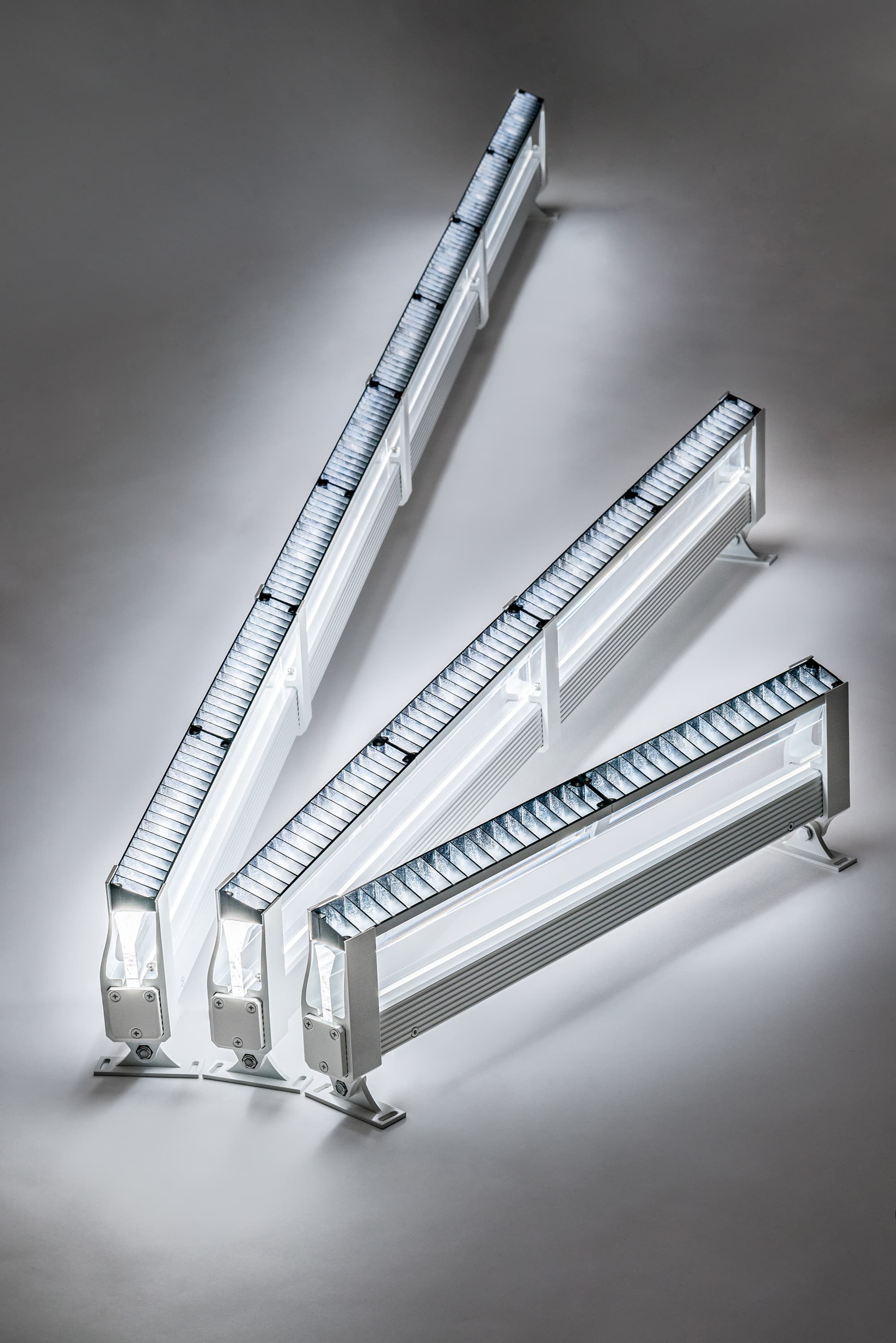
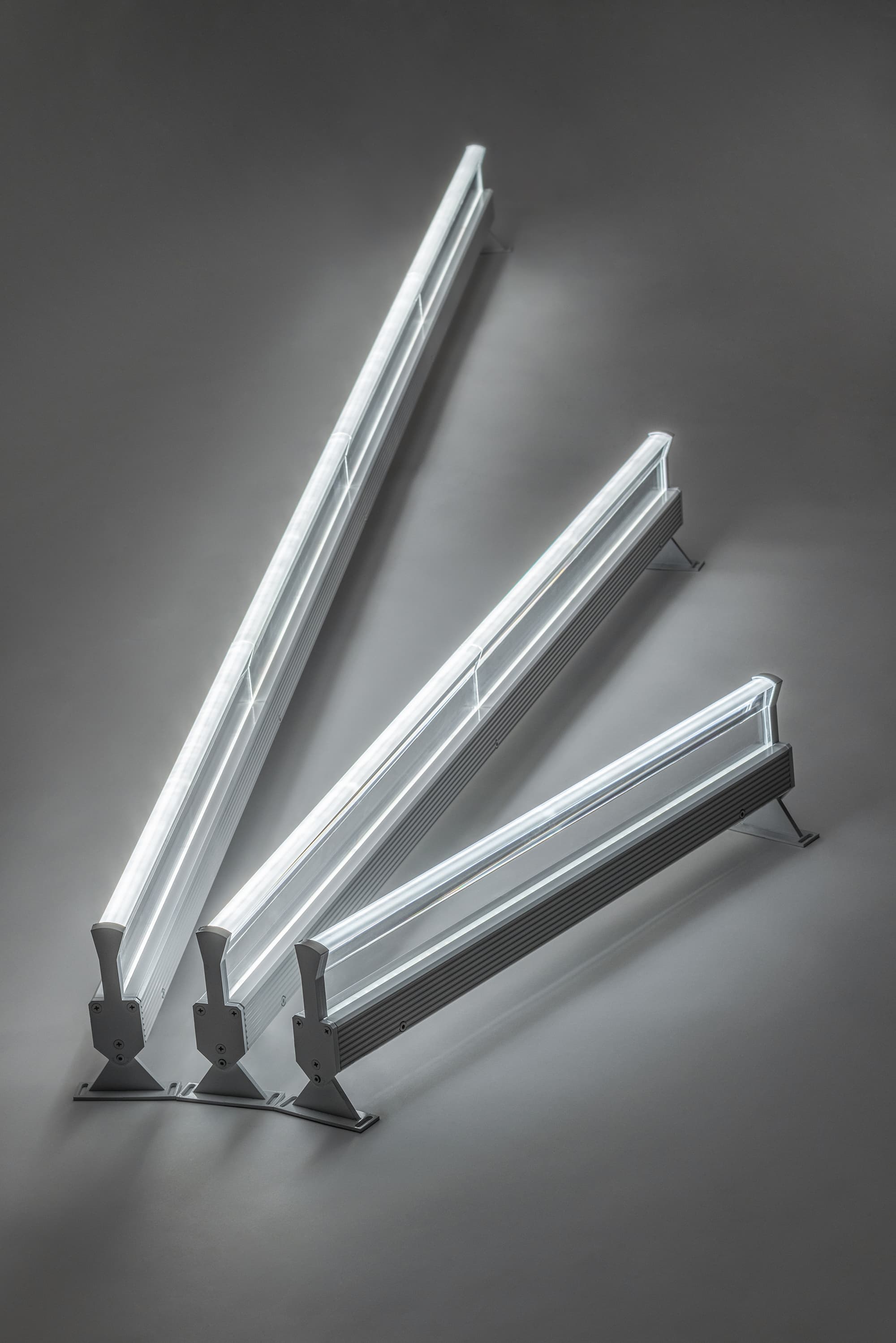
Left: The customized Q-Wall luminaire featuring anti-glare louvers, as implemented at the Museum of Fine Arts, Ho uston. Right: The standard Q-Wall model. Photos – Ronnie Johnson
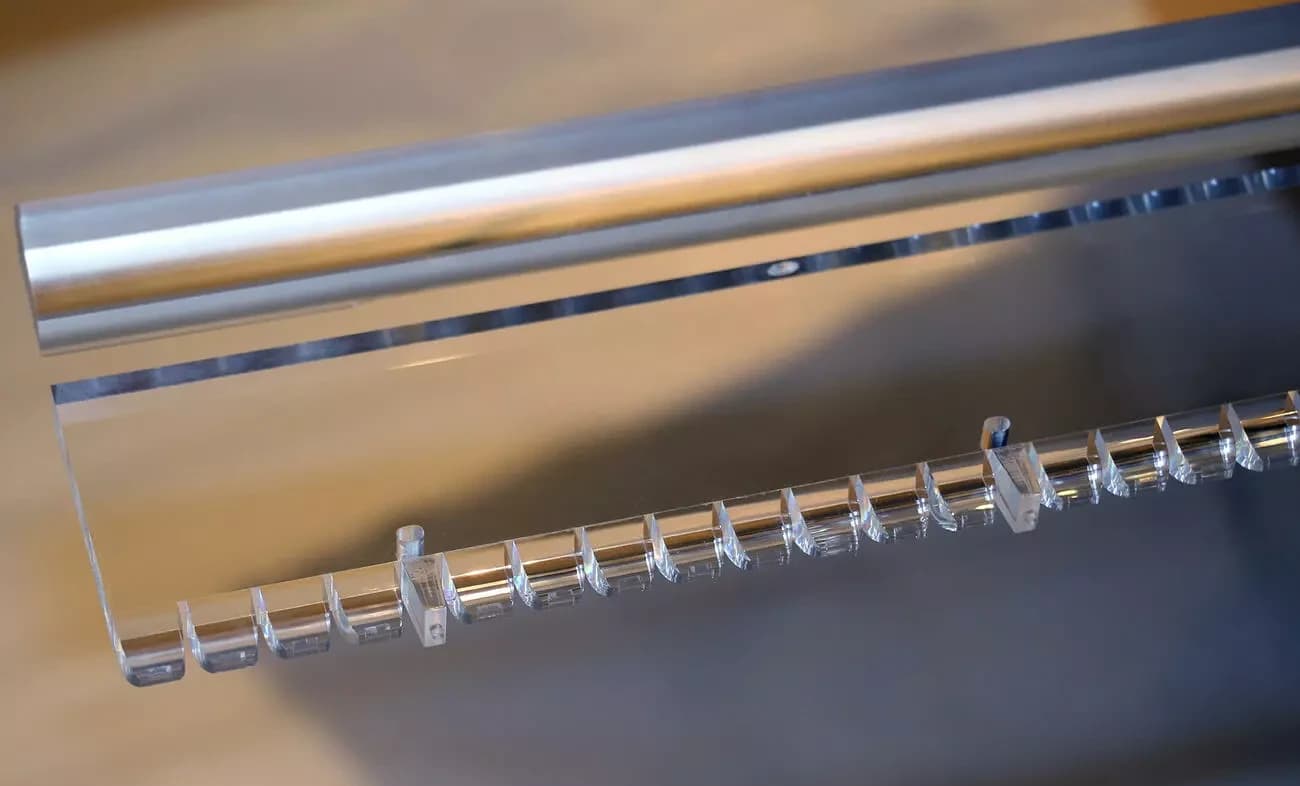
Close-up of Q-Wall optics using Edge-X technology. Photo – WITTMANN UPT-Optik Wodak GmbH
- UPT Optik Wodak GmbH, a precision injection optics molder based in Germany, played a critical role in developing the complex optics and bonding processes essential to the performance of the Q-Wall luminaire.
The project had an accelerated assembly schedule of just over two months, following ten months of meticulous planning.
Key members of the engineering team who contributed to the success of this project include Ingo Speier, Andrew Gladwin, myself, and offsite contributions by Eric Bretschneider, Bob Gardner, and others. L’Observatoire International, a renowned New York City lighting design firm, specified the MFAH gallery lighting using QuarkStar’s Q-Wall luminaire. ■